


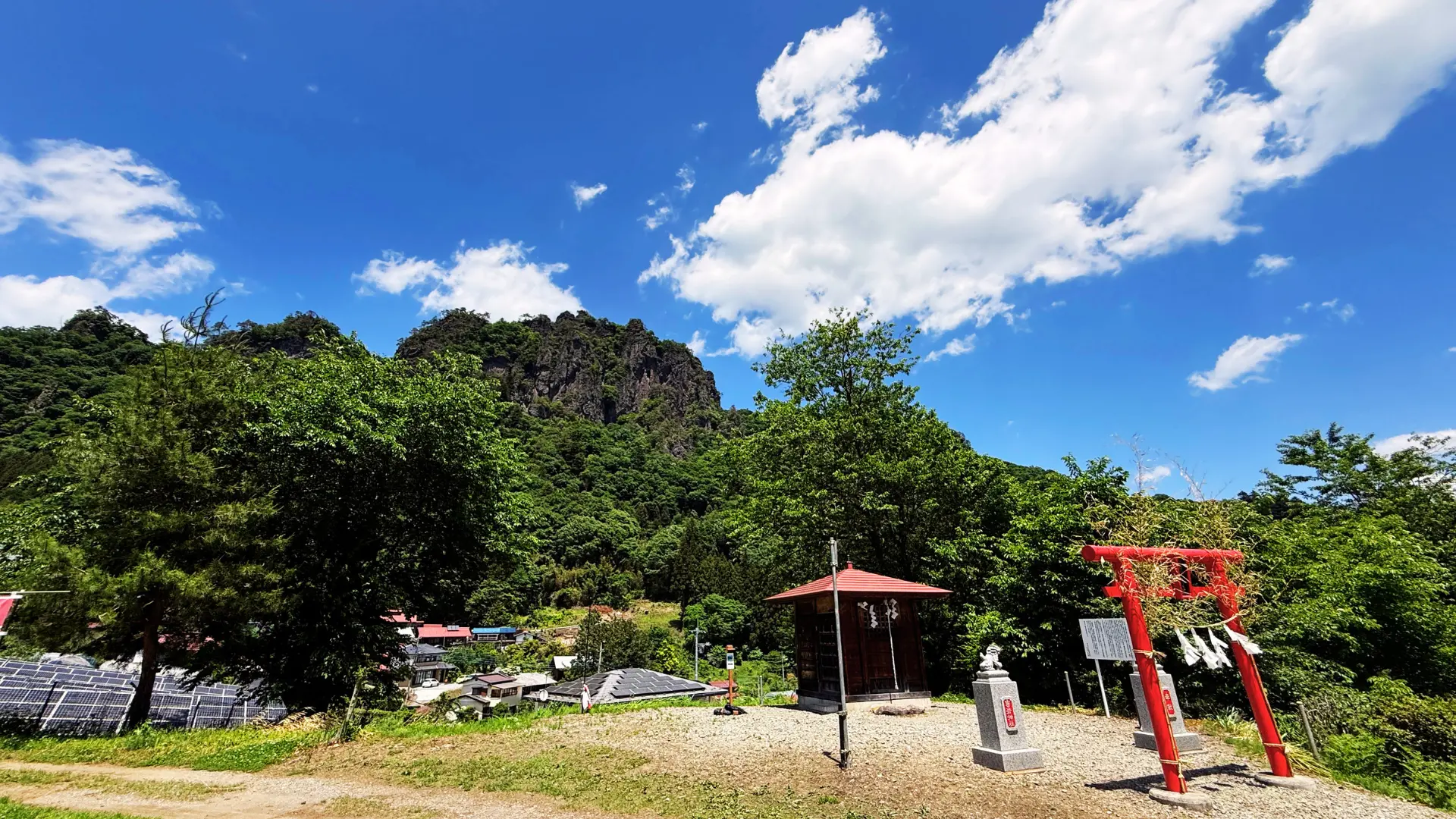
Have you ever seen a mysterious rock in Japan with a sacred rope tied around it?
In Japan, some rocks are not just rocks.
They may stand quietly in a forest, beside a shrine, or on a mountain path, marked with a sacred rope or surrounded by a sense of silence. These rocks are often connected with an old Japanese belief known as iwakura.
Iwakura refers to sacred rocks believed to be places where kami, or Shinto deities, descend or dwell. Long before large shrine buildings and Buddhist temples became common in Japan, natural places such as rocks, mountains, trees, and waterfalls were already seen as sacred.
This guide explains what iwakura means, why rocks were considered sacred in Japan, and how these ancient beliefs still appear in shrines and landscapes today.
・What iwakura means in Japanese belief
・Why some rocks in Japan are considered sacred
・How sacred rocks are connected with kami and Shinto
・Why some sacred rocks have shimenawa ropes
・How to recognize and visit sacred rock sites respectfully
What is “Iwakura”?
Iwakura refers to a sacred rock or stone formation in Japanese belief. It is often understood as a place where kami, or Shinto deities, descend, dwell, or are invited during rituals.
Unlike a shrine building, an iwakura is not made by people in the same way. It is usually a natural rock, boulder, or group of stones that has been treated as sacred because of its presence, shape, location, or connection with local belief.
In simple terms, iwakura means that a rock is not only part of the landscape. It may also be seen as a sacred place where the invisible world and the natural world meet.
Examples of Iwakura and Sacred Rock Sites
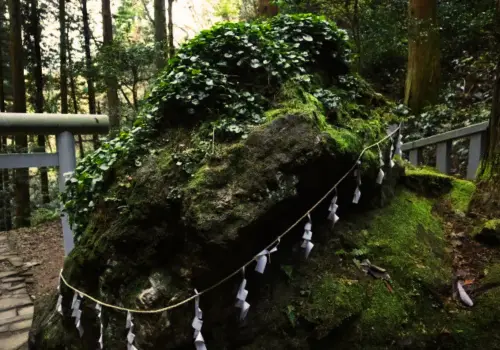
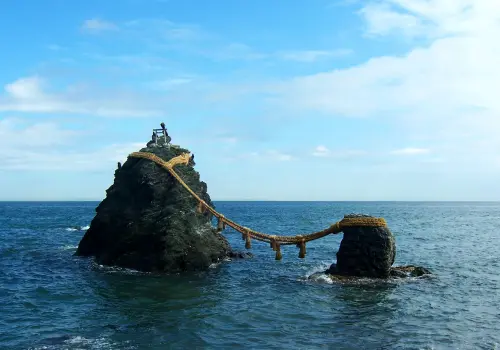
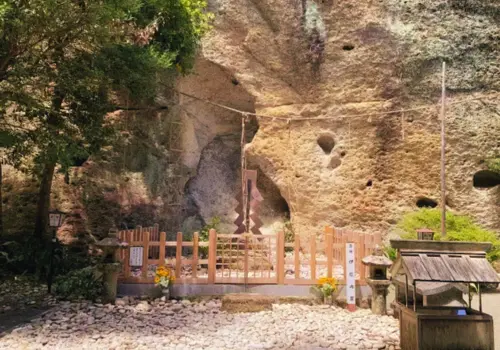
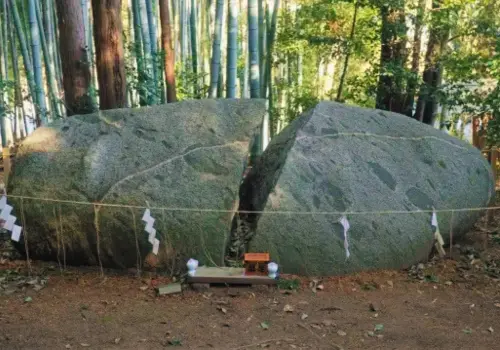
Why Were Rocks Considered Sacred in Japan?
In ancient Japan, people often felt the sacred through nature. Mountains, forests, waterfalls, old trees, and unusual rocks were seen as places where kami, or divine presences, could appear.
Rocks were especially important because they were still, strong, and long-lasting. A large stone in a forest or near a mountain could feel different from ordinary space. It could mark a place where people prayed, made offerings, or treated the land with special respect.
In many cases, the rock itself was not the kami. It was respected as a sacred place connected to kami and early forms of worship.
For modern visitors, iwakura show an older layer of Japanese spirituality — a time when nature itself was the center of worship.
Iwakura and Shinto Belief
Iwakura are closely connected to Shinto, Japan’s native spiritual tradition. In Shinto, kami are not limited to shrine buildings. They can be associated with mountains, trees, rivers, waterfalls, and rocks.
A sacred rock may be seen as a place where kami descend, dwell, or are honored. In some places, the rock is marked with a shimenawa rope to show that it is separated from ordinary space.
This does not always mean that the rock itself is worshipped as a god. More often, it is respected as a sacred place connected to kami.
For this reason, iwakura help visitors understand an important part of Shinto: the sacred can be found within nature itself.
Why Some Shrines Face Sacred Rocks
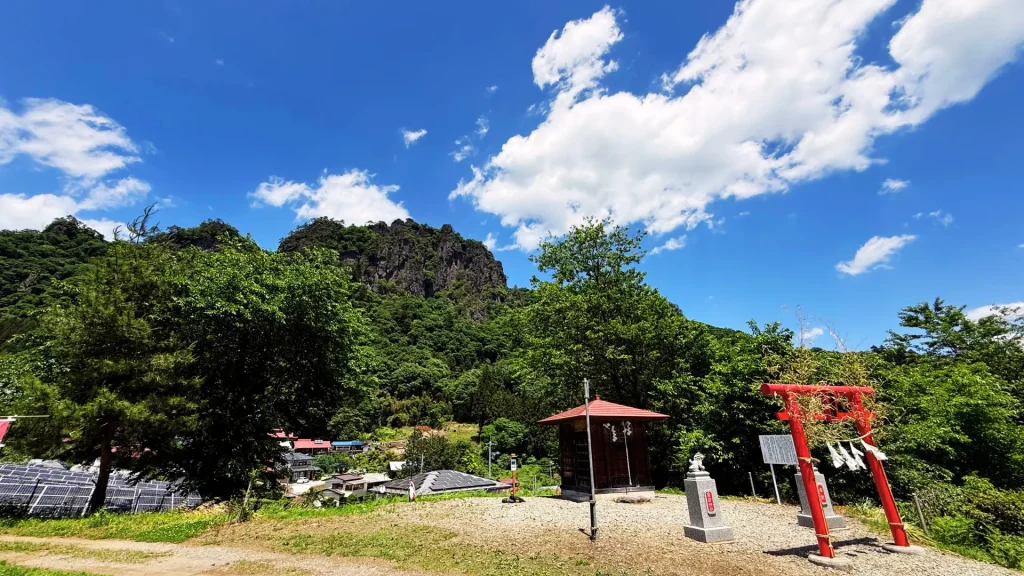
Some shrines may also preserve an older direction of worship.
In certain cases, the path, worship hall, or prayer direction appears to face a sacred rock, mountain, or hidden natural site behind the shrine.
This suggests that the original focus of worship may not have been the shrine building itself, but the natural sacred place beyond it.
Why Do Some Sacred Rocks Have Shimenawa Ropes?
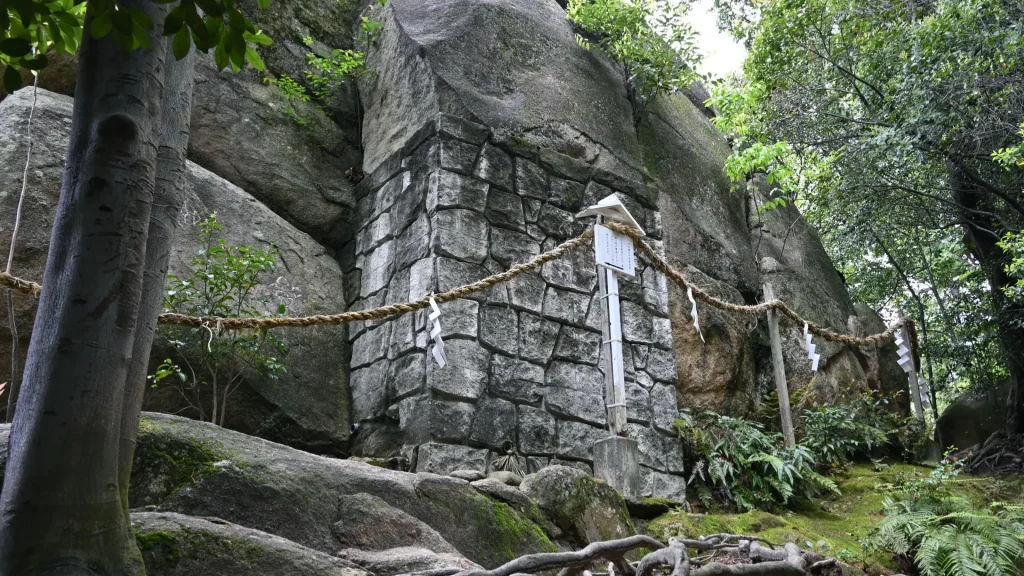
Some sacred rocks in Japan are marked with a shimenawa, a sacred rope often seen at shrines.
A shimenawa shows a boundary between ordinary space and sacred space. When it is placed around a rock, it tells visitors that the rock is not just part of the landscape. It is treated as a sacred place.
The rope may also show that the rock is connected to kami. In this sense, the shimenawa works like a quiet sign. It does not explain everything in words, but it tells people to approach the place with respect.
For travelers, seeing a shimenawa around a rock is one of the easiest ways to recognize an iwakura or sacred natural site.
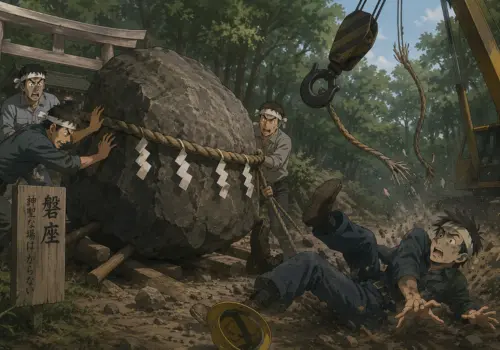
A Folklore Note: Sacred Rocks and Sacred Trees
In some parts of Japan, there are local stories about accidents or misfortune happening after someone tried to move a sacred rock or cut down a sacred tree.
These stories should not always be read literally as “curses.” Rather, they show how strongly people felt that certain natural places should not be disturbed. A sacred rock or tree was not just part of the landscape. It marked a boundary between ordinary space and sacred space.
Whether these stories are history, legend, or local memory, the message is often simple: do not treat a sacred place as ordinary land.
How to Recognize Iwakura in Japan
Iwakura are not always easy to recognize. Some are famous sacred rocks with signs and shrine buildings nearby, while others are quiet stones in forests, mountains, or shrine grounds.
One common sign is a shimenawa rope around the rock. This rope shows that the place is separated from ordinary space and should be treated with respect.
You may also see a small torii gate, a tiny shrine, offerings, or a signboard explaining the history of the place. Words such as “iwakura,” “kami-ishi,” “goshintai,” or “sacred rock” can also suggest that the rock has religious meaning.
The location is also important. Sacred rocks are often found near mountains, forests, waterfalls, old shrines, or places that feel slightly removed from daily life.
If you find a rock marked with a rope, gate, or sign, do not climb on it or step inside the sacred area. Even if it looks simple, it may be an important place for local people.
How to Visit Sacred Rocks Respectfully
When visiting an iwakura or sacred rock, the most important rule is simple:
treat it as a sacred place, not just a photo spot.
Do not climb on the rock, move stones, or step inside areas marked by ropes, fences, or signs. If photography is not allowed, follow the rule. Even if there is no sign, avoid touching the rock unless it is clearly permitted.
It is also best to keep your voice low and avoid disturbing the surrounding area. Many sacred rocks are connected to local beliefs, shrines, or community memory.
A good approach is to observe quietly, read any signboards, and follow what local visitors do. Respecting the boundary between ordinary space and sacred space is part of understanding iwakura.
Why Iwakura Still Matter Today
Iwakura still matter because they show how deeply Japanese spirituality is connected to nature.
They are not only historical objects or unusual stones. They remind us that mountains, forests, trees, and rocks have long been seen as places where people could feel the sacred.
Some scholars and local traditions suggest that this way of seeing nature may reach back to the Jomon period, long before Buddhism and large shrine buildings became common in Japan.
For modern visitors, iwakura offer a quiet way to understand Japan beyond temples and tourist spots. They show an older sense of respect for the natural world — one that can still be felt today.
FAQ About Iwakura
What does iwakura mean?
Iwakura generally refers to a sacred rock or rock formation connected to kami, the divine presences in Shinto belief.
Are iwakura the same as shrines?
Not exactly. Some iwakura are found within shrine grounds, but the rock itself may be older than the shrine building or represent an older form of worship.
Can visitors touch or climb on iwakura?
Usually, no. If a rock is marked with a shimenawa rope, fence, or sign, visitors should not touch it, climb on it, or enter the sacred area.
Are iwakura connected to ancient Japanese nature worship?
Yes. Iwakura are often seen as part of Japan’s older nature-based spirituality, where mountains, forests, trees, waterfalls, and rocks could be treated as sacred.
Final Thoughts
Iwakura are quiet reminders of an older way of seeing Japan.
They show that the sacred was not always found inside buildings. It could be felt in mountains, forests, trees, waterfalls, and rocks.
For travelers, sacred rocks are not just unusual sights. They are small doorways into Japan’s ancient relationship with nature, kami, and sacred space.
When you encounter an iwakura, the best way to understand it is simple: slow down, observe quietly, and approach it with respect.